
Sunday, July 21, 2019

Saturday, July 20, 2019

Friday, July 19, 2019
National Theater.

On this tour, we stopped by the National Theater but this time we got to go inside it rather than just remaining in the lobby. Just a recap in that it took 7 years to build and cost about $1,000,000 to complete a theater that will seat 1140 people. This theater has one thing most theaters do not have.

The chairs on the main floor of the theater, just in front of the stage are removable. When they need more of a stage then you see there, they take out all the chairs on the main floor before going underneath and using a bunch of people they make the floor rise to the level of the stage. The mechanism requires people to push bars around and around which makes other things move that raises the stage.

The theater has three levels in addition to the main floor. The highest level is where the cheapest tickets are. Originally, only those with money could afford to go and to make sure the unwanted would not come in, they made a rule that you had to have shoes. The poor did not have shoes so even if they could find the money, they could not have gotten in.

This is a picture of the ceiling. The picture was hand pained in Italy, rolled up and shipped all the way over to Costa Rica before it was installed.

This bank note which is out of circulation has a copy of the picture found on the ceiling of the theater just above the waiting area to go into the presidential stall or into the waiting room. This is the Italian interpretation of Costa Rica. It is noted that all the workers have shoes which they would not have had. The women are wearing something they would not have worn and many are much paler than they would have been.

This is a copy of the painting on the ceiling. You can see it is essentially the same, just a bit darker.

This is the room where the rich mingled and enjoyed time together before the performances and during intermission. There is a piano, sculptures, places to sit comfortably. None of the poor were allowed in here.

There are two small rooms, one on each side of the salon. This is a picture of the one where men gathered to carry out business, smoke cigars, and be away from the women. The other room, is about the same size but it is where women would have congregated.
This theater is still in use even today but in between times, tours bring people through to see everything. The lobby has four statues in a Grecian style representing dance, music, comedy, and tragedy.
The only changes made to the theater over the years is the installation of water and electricity, otherwise it is exactly as it had been when it opened in 1897. Let me know what you think, I'd love to hear. Have a great day.
Thursday, July 18, 2019
Walking Food and Culture Tour

At one point, the government offered land with coffee plants to people who worked the coffee plantations for 5 years.
This coffee roaster/grinder is wood fired and the original one used long time ago. It is still used today. I am not a coffee drinker but one of the people on the tour with me said the coffee was awesome.
They grown one type of coffee for export and others that are not considered as good for the locals.

One of the first stops was at a fruit and vegetable market. It has been there since 1950 and since the government could not afford to build it, the farmers built it with their own money. We stopped at this person's stand to try several different fruits and they were so good. I ended up trying a few I've never had including the Jocote which is best ripe, a sweet lemon that is not acidic, and another fruit that puckered my mouth up easily. It was a good start.

According to the guide, many Costa Ricans believe in going to partitioners who prescribe herbs and roots to solve health problems. Because they believe in it, they feel it works. It is intregal to their belief system.

This shop is called a "Witch" Shop because you can get potions, candles, incense designed to help people. The bottles contain lotions you put on after your shower to help stop gambling, stop your wife from being loud and naggy, etc. If you prefer, they have candles which you can burn to do the same thing.

The contraptions you see above are the ones used by most of the population to make coffee. At the last stop of the tour, the gentleman used one to make a pot of coffee for all the coffee drinkers. They say the darker the cotton filter is the better coffee you get out of it. The others with me said the coffee was really good.

These statues celebrate those who worked to raise the crops. The man in front and the women directly behind him (she is hidden) wear shoes while the rest do not. Historically, those who could afford shoes were considered rich so these two are the rich ones. The rest are workers. The woman in the back left is expecting and has a child but she would have worked as hard as the rest.

This is one of the older churches with its beautiful architecture. We stopped through to check it out while a service was going. The center seats were for the rich while the poor sat in the side seats which were not as nice, nor as comfortable. This seems to be a common theme throughout the place. Even the post office boxes were sized according to if you were poor, middle class or rich.

This is the outside of the National Theatre built between 1890 and 1897 by using monies collected from taxation. It was quite expensive to build because much of the materials used in it were imported from Italy and other European countries. In fact, there is a painting over the stage done by an Italian artist who'd never visited the country. The Governor send his requirements and the artist painted it based on his interpretation so he had all the workers with shoes and the guy holding the bananas, just held them up. He didn't have them on his back as was traditional.

Below is where in the past they would have music played with people dancing around the building. The men formed one ring around the gazebo while the women formed another ring between the men and the musicians. They would dance, each group moving after a bit to dance with a new partner but if a couple connected their eyes at paid attention to them as they met again and again in the dance, they'd get to know each other better.
 This is the Cacao fruit from our last stop where we at Costa Rican tamales and had the original type of hot cocoa they'd drink. They explained how they make cocoa from these fruits. The tamales were wrapped in banana leaves and boiled till done. This gives the food a chance to acquire flavor from the banana leaves. At the end, the host made a hot chocolate with solid chocolate, hot water, spices, and a bit of sweetener. It was thick, not very sweet, but very very good. So different from American hot chocolate.
Tomorrow, I'll have some pictures from the tour I'm taking to see several land marks and visit a couple of museums including the museum of gold. I hope you've enjoyed the pictures. Let me know what you think, I'd love to hear. Have a great day.
Wednesday, July 17, 2019
Pedestrian Mall

 From my hotel, I went to the next street that turned into a pedestrian mall extending several blocks. It was lovely not having to watch for cars. The streets running through the area are quite narrow so you end up crossing when you can, usually through a row of stalled cars waiting to move.
There are all sorts of stores from make-up to bakery, to bedding, each one small and nice. People stroll down the shops, popping into the ones they are interested in and just enjoying the others.
Money is mostly in 1,000, 2,000, or 5,000 prices. Sometimes, you find things less that that but usually in those denomination. I purchased a cup with Costa Rica on it and two beautiful sloths for 3,000 or about $6 US.
I also purchased two apples and one beautiful mango for under 1,000 in Costa Rican money. I'll put pictures up of those tomorrow.

If you notice, there are places above the stores for either housing or offices. My hotel has rooms and its restaurant on the second floor where I am. The only thing on the first floor is the front desk, elevator, and stairs.
During my walk I saw two make-up stores, several shoe or clothing stores. There are even electronic stores.

On my walk, I saw a butcher shop at the corner next to a restaurant. As a matter of fact, there are restaurants sprinkled throughout the walk including a couple of places labeled as McDonalds. I took a picture of the smaller one but in the next block on the other side of the street, there was a larger one. It looked like there was a place to get ice cream things in front and in the back you get the burgers and such.

I am finding the lack of Spanish to be a bit of an issue. I took it many years ago but since I moved to Alaska I have not had a chance to use it and it has all gone away. I still understand more than I speak and I am able to communicate enough with signs and pointing to get what I want.
I also noticed in a couple fruit and veggie stands you are more likely to find Plantains than Bananas. I love Plantains but you usually cook them.
Tomorrow I'll be sharing photos from the food tour I took that started at the Central Market. This is one of the places that is almost a block and is a cluster of small stalls and eating places.
In the mean time, the day after, I'll have photos of museums, etc of important buildings in the town. I know when I come, I'll visit the other side where the smaller more real places are. This is a big city and ok but not as good as the other parts of the country or that's what I'm told by all who I've met from here.
Let me know what you think, I'd love to hear. Have a great day.
Tuesday, July 16, 2019
Arrived in Costa Rica
 |
| My room. |
Going through immigration was quite easy but the form used lost something in translation between Spanish and English. For instance, they asked for my "foreseen address". or where would I be staying. They also asked for the number of the document I was using which for me was a passport.
For customs I just placed all my bags, suitcases, etc in an x-ray machine and picked them up on the other side. I go through the same process when I leave Hawaii.
 |
| The view out my window. |
He went on to explain how to tell if a taxi or vehicle is licensed by the government to transport visitors. All drivers must have driven at least five years, have gone through a customer service course, and passed a government administered test.
He also pointed out the old airport as we passed it. He said that Charles Lindbergh landed there at some point and people went out and got tuxedo's to wear when he landed.
 |
| My room has a refridgerator. |
I understand my hotel is in the center of San Jose. The buildings are older and the place looks like it has tons of small little stores. The driver said it will be extremely crowded tomorrow morning as people come out and do business.
One thing I noticed on the way to the hotel were the garbage trucks. They collect trash at night because they would be unable to do it in the morning due to traffic.
I understand the part of town with the homeless and the drug dealers are a few blocks away but I'm told the police keep them under control during the day.
Today I am hoping to explore a few places around here but I want to relax and recover from all the travel. Wednesday, I've signed up for a food tour, Friday I am going on a trip to see the volcano, the botanical garden, and one more thing. I'm thinking of throwing another tour on Thursday, then relax Saturday because I fly back Sunday.
I plan to take a ton of pictures and share them. Let me know what you think, I'd love to hear. Have a great day.
Monday, July 15, 2019
The Dictionary Wars
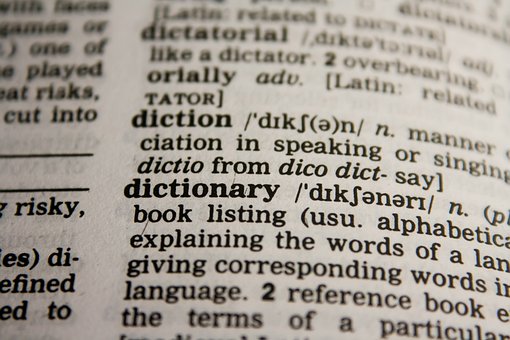 Most of us, if asked who wrote the first dictionary, will answer - "Webster of course" because that is what we are taught but they've left a bit off.
Picture this if you will. Its the end of the Revolutionary war. America has just gained its independence and as part of that need, two men began creating American dictionaries filled with proper American words.
They wanted something similar to the dictionary published by Samual Johnson in 1755 but without all the "English" words. Thus two men, Noah Webster and Joseph Emerson Worcester began writing official dictionaries. Webster believed an American Dictionary should be governed by the nations principals while Worcester thought that went too far.
Noah Webster felt that his dictionary should reflect the linguistic independence of America by dropping the K from words such as musick, or the re at the end of theatre became er making it theater. He also omitted words such as that he felt were morally offensive so you would not find them in is version.
In addition, Webster had been publishing dictionaries but they were not very accurate. His definitions often were mini essays expounding his moral beliefs, his etymologies could be quite fanciful, spellings were of his own invention such as aker for acre. By the 1830's he'd published enough editions with different information and spellings that he couldn't reconcile them.
Joseph Emerson Worcester also worked on a version of the American Dictionary after he decided it was his calling. He had already published books on geography and history and was well known for them and he published the American edition of Samual Johnson's dictionary. In 1827, Webster's son-in-law got him to sign over his rights to a one volume dictionary. He and the publisher hired Worcester to postpone work on his own dictionary to edit Webster's work into one volume.
Worcester made major changes and included certain charts that remained with and attributed to Webster's dictionary for many years afterward. It took him eight months to finish the work before he was able to return to his own work. Webster was not happy with all the editing done to his work so he alleged that Worcester was plagiarizing his work.
These wars did not cease upon Webster's death in 1843. His family fought to take control of his copyright and profits so they brought the Merriam Brothers into the picture. In addition, the Merriam Brothers continued repeating allegations of plagiarism against Worcester through the use of scandal ridden pamphlets.
Worcester finally published his version in 1860 and many scholars of the day claimed it was the best dictionary out there but the Merriam Brothers continued their public relations fight against Worcester by publishing accusations in newspapers across the nation. When he died in 1865, his reputation had been slaughtered.
Eventually, the editorial duties for the dictionary were given to Noah Porter at Yale College where he and others rewrote Webster's dictionary so it was a scholarly work rather than a platform for beliefs and it was this edition that formed the basis of the Merriam-Webster dictionary.
During the whole time between 1843 and 1865, everyone weighted in on the dictionary question. Universities, religious groups, state governments, scholars, etc to argue and lay input but by 1865, Webster's came out on top and that is why it is the dictionary we are taught is the first American Dictionary.
Let me know what you think, I'd love to hear. Have a great day and tomorrow, you might see my first pictures of Costa Rica where I'll be spending the week.
Subscribe to:
Posts (Atom)